Planning a commercial air conditioning installation? Our guide explains realistic UK prices, what drives the cost and how to get the best value for your business.

When the temperature climbs, your business feels it first. Staff lose focus, customers cut their visits short, and equipment starts working harder than it should. If you're planning a commercial air conditioning installation, the first question is usually the simplest one: how much will it cost?
The honest answer is that it depends. That can feel frustrating when you're trying to set a budget. So in this guide, we've set out realistic UK price ranges, explained exactly what drives the cost up or down, and shared the questions worth asking before you sign off a quote. Whether you run a single retail unit or manage a multi-floor office, you'll come away knowing what to expect and how to get the best value from your investment.
Most UK businesses pay between £3,000 and £75,000+ (ex VAT) for commercial air conditioning installation. Small shops, studios and offices typically sit between £3,000 and £12,000. Larger, multi-zone VRF systems for bigger buildings cost significantly more. The final price depends on the system type, building size, heat load, access and electrical capacity.
Key takeaways
Every building is different, but the ranges below give you a reliable starting point. All prices are indicative, exclude VAT, and assume a standard installation with reasonable access.
Single split systems: A wall-mounted single split system is the most affordable option. It typically costs £2,000 to £5,000 per indoor unit. It's well suited to small offices, studios and treatment rooms, and installation can usually be completed in one or two days.
Multi-split systems: If you need to control several rooms separately, a multi-split system connects two to five indoor units to a single outdoor unit. These generally cost £4,500 to £10,000 or more, with installation taking two to four days.
Ceiling cassettes: Cassettes are a popular choice for open-plan offices, shops and restaurants. They cost around £3,000 to £6,500 per unit, and each unit usually takes one to three days to install.
Ducted systems: Ducted systems give a discreet, concealed finish and typically cost £6,000 to £20,000 or more. The extra ductwork means installation usually takes between three and ten days.
VRF and VRV systems: At the top end, VRF and VRV systems serve medium to large offices and multi-zone buildings. Prices typically start at around £12,000 and can exceed £75,000 on larger projects. Installation takes anywhere from one week to more than four, depending on the size of the building.
Small offices and studios: For premises up to around 50m², a single split system or ceiling cassette is usually enough. Expect to pay £3,000 to £6,500.
Retail units: Units between 50 and 150m² typically use cassettes or a multi-split system, with costs ranging from £5,000 to £12,000.
Restaurants, cafés and bars: These spaces often generate more heat from customers, lighting and cooking, so they may need cassettes, ducted systems or VRF. Typical costs are £6,000 to £18,000 for premises of 80 to 200m².
Medium offices: Offices between 100 and 300m² usually suit a multi-split or VRF system, with budgets of around £9,000 to £25,000.
Gyms and leisure facilities: These have high occupancy and heat loads, so they commonly use ducted or VRF systems. Costs typically range from £10,000 to £30,000 for spaces of 150 to 400m².
Large and multi-floor buildings: Large offices and multi-floor buildings over 500m² generally require a VRF or VRV system. Investment typically ranges from £30,000 to £75,000 or more.
If you want a quick budget figure before speaking to an installer, allow roughly £60 to £120 per square metre for small to medium commercial spaces. Spaces with high heat loads, such as server rooms, busy kitchens or heavily glazed shopfronts, will sit towards the top of that range. A simple, well-insulated office will sit nearer the bottom.
Treat this as a planning figure only. The only way to get an accurate price is a professional site survey.
If you've already collected a few quotes, you may have noticed that prices for what looks like the same job can differ by thousands of pounds. There are usually good reasons for that, and understanding them helps you compare fairly.
Equipment quality: Premium manufacturers cost more upfront, but they typically offer better efficiency, quieter operation, longer warranties and easier access to spare parts.
What's included (and what isn't): One quote might include electrical works, condensate pumps, controls, making good and commissioning. Another might list several of these as extras or leave them out entirely.
How the system was sized: A proper installer calculates the heat load of your space before recommending a system. An oversized system costs more to buy and wastes energy through constant short cycling. An undersized one struggles on the hottest days, which is exactly when you need it most.
Experience and compliance: Certified engineers, proper pressure testing, full commissioning and a clear handover pack all take time. Cutting those corners makes a quote look cheaper, but it often leads to faults, leaks and higher costs later.
The cheapest quote is rarely the cheapest system to own. The better question is which quote gives you the right system, installed properly, with nothing hidden.
A professional commercial air conditioning installation is more than fitting a unit to a wall.
On a typical project, the equipment itself (the indoor and outdoor units) accounts for the largest share of the budget, usually around 35 to 45% of the total. Labour and installation make up a further 25 to 35%. Electrical works typically represent 10 to 15%. Pipework, condensate drainage and containment account for around 5 to 10%, and controls and system integration another 5 to 10%. Commissioning, certification and handover usually make up the final 2 to 5%. This last stage is small in cost terms, but it's essential to a safe, reliable system.
Here's what each element involves.
This covers the indoor units that deliver conditioned air into your space and the outdoor condensing units that reject heat outside. The number, size and type of units is the single biggest factor in your budget.
Mounting units, cutting and sealing penetrations, fixing brackets and positioning outdoor plant all take skilled time. Complex routes, high ceilings or working around a live business add to the hours.
Refrigerant pipework connects indoor and outdoor units, and condensate drainage removes the water your system produces. Neat trunking and containment keep everything tidy and protected.
Your system will need dedicated circuits, isolators and a safe connection to your distribution board. Older buildings sometimes need board upgrades first.
Controls range from simple wall controllers to central systems with scheduling, zoning and remote access. Many larger buildings integrate with an existing Building Management System (BMS).
Before your system goes live, it should be pressure tested, vacuumed, charged, tested and commissioned by F-Gas certified engineers. You should then receive the documentation, warranty registration and guidance on using the system efficiently.
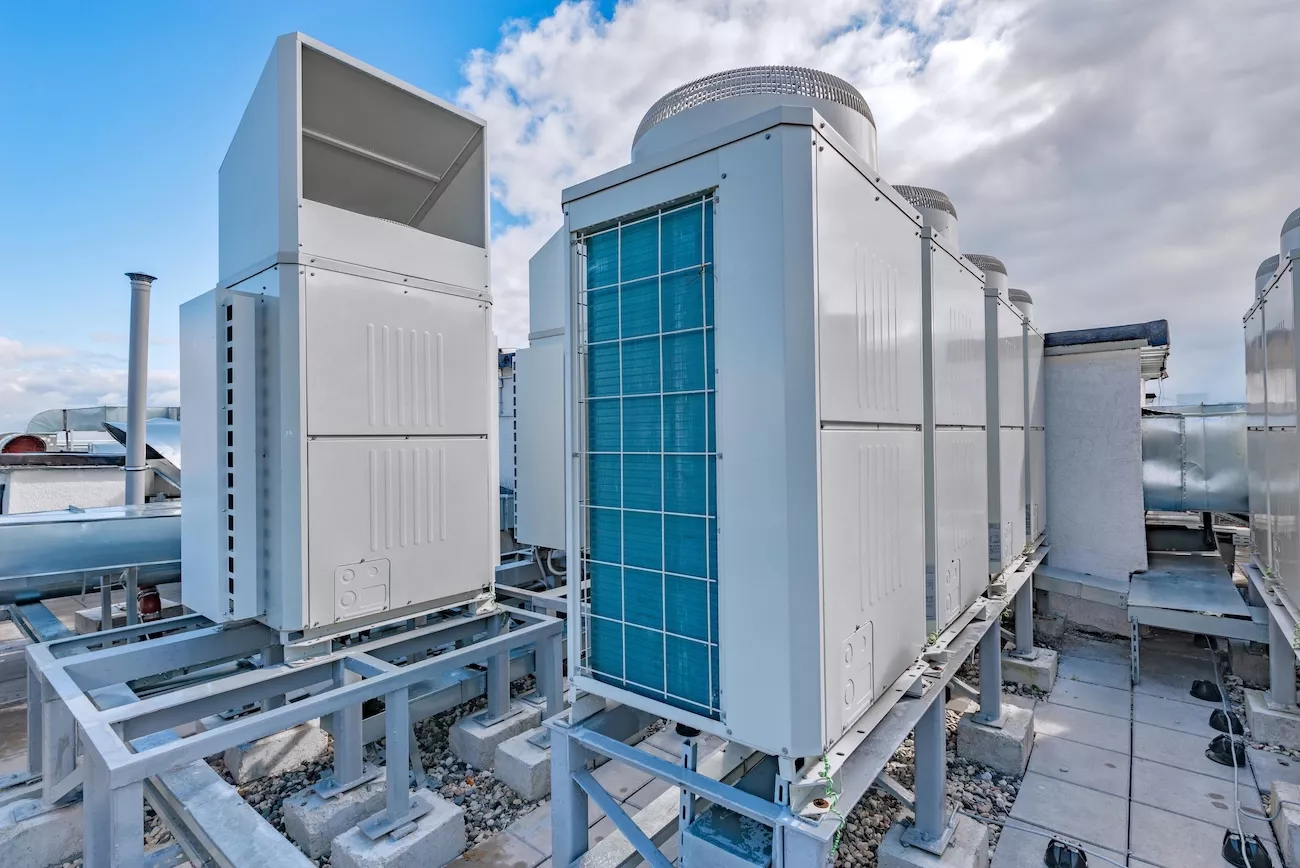
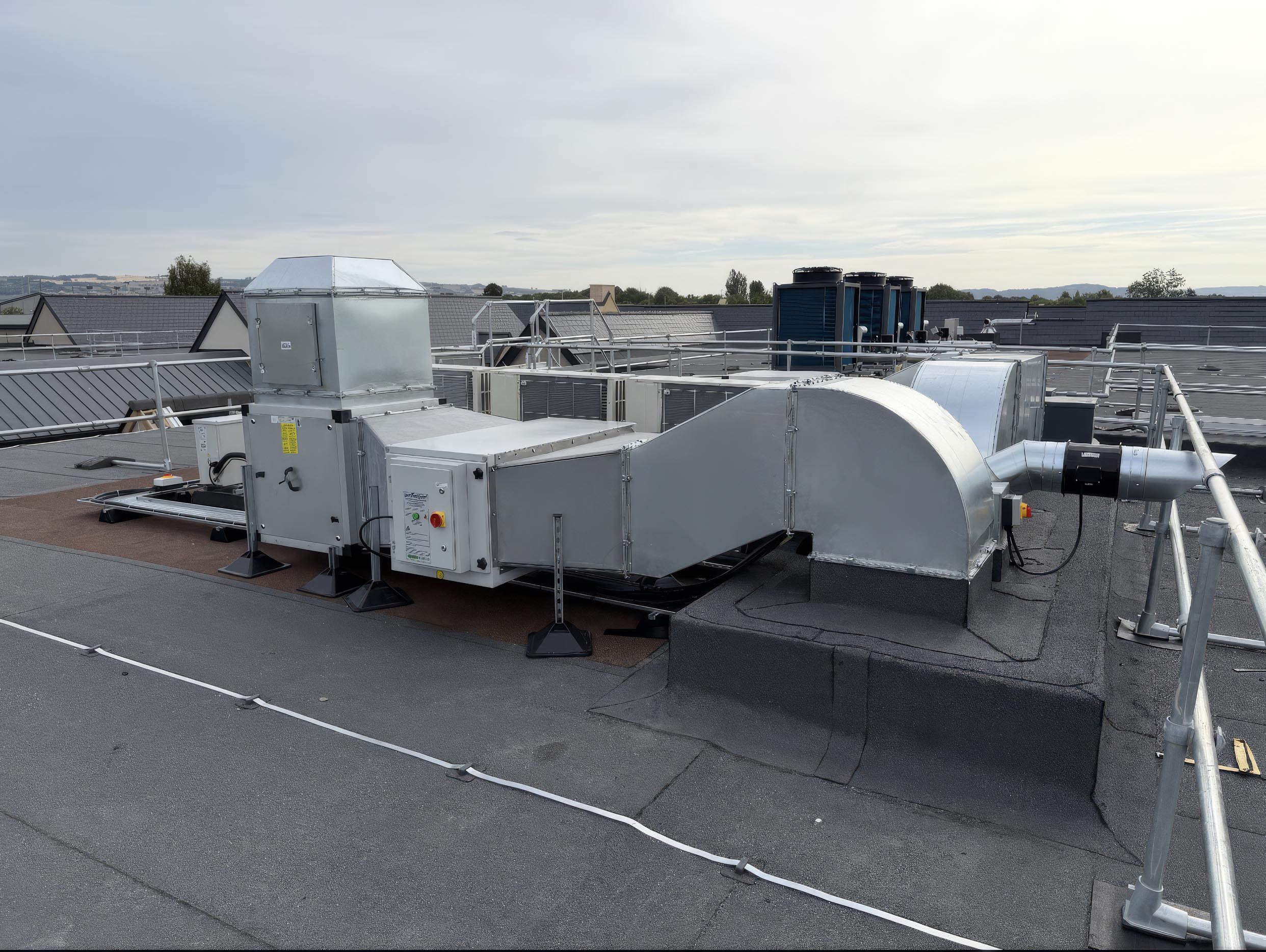
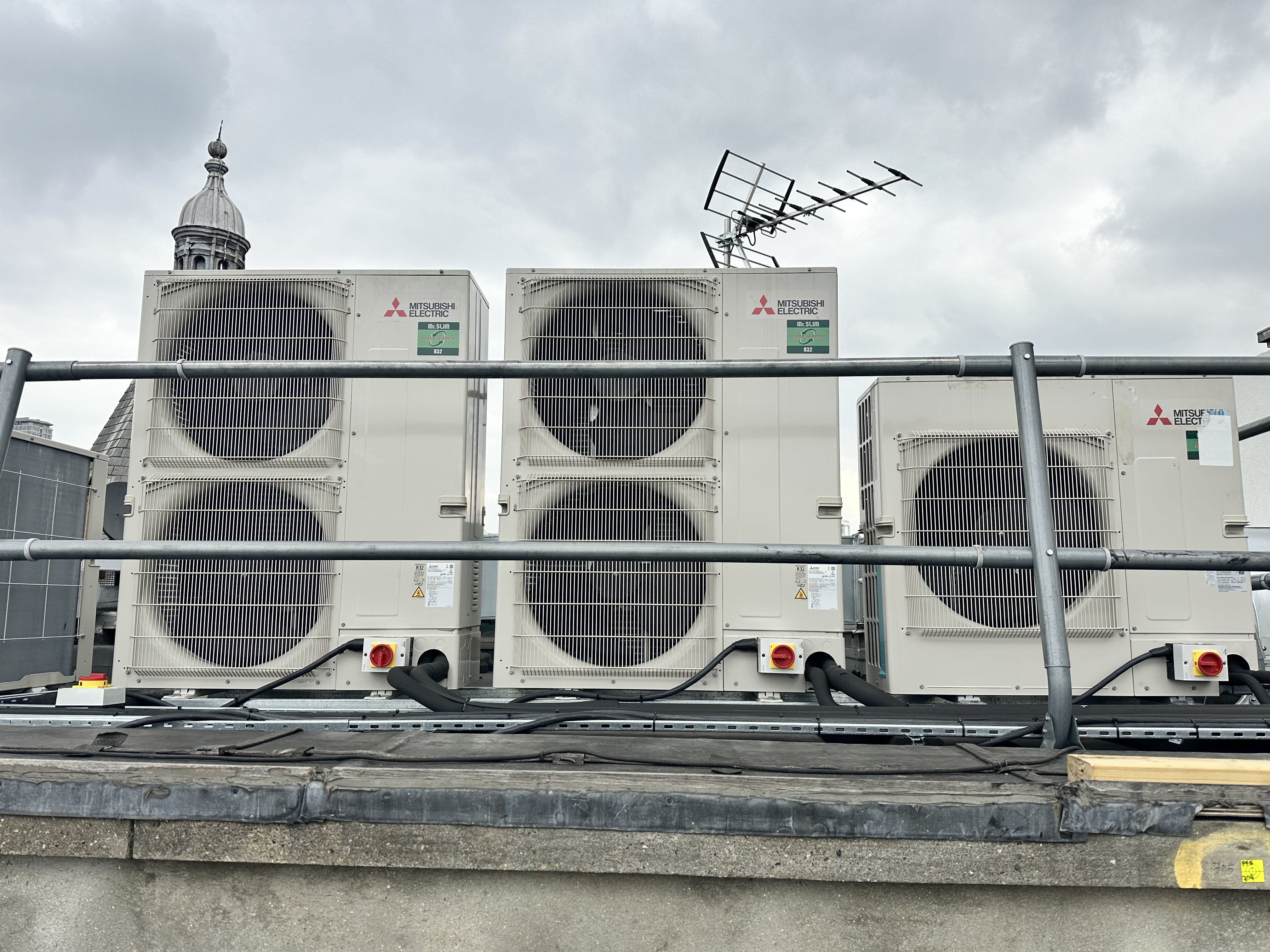
A single wall-mounted split costs far less than a VRF system serving an entire floor. Capacity, measured in kilowatts (kW), increases with the size of the space and the amount of heat it generates.
Two buildings of the same size can need very different systems. Large windows, south-facing glazing, IT equipment, lighting, cooking and the number of people in the space all add heat that your system must remove.
The further your indoor units are from the outdoor plant, the more pipework, labour and refrigerant are needed. Multi-storey buildings and cellular layouts with lots of separate rooms typically cost more than open-plan spaces.
Outdoor units need a suitable home, whether that's a flat roof, a rear yard or a wall bracket. Roof installations may require cranes, scaffolding or specialist lifting equipment, and some sites need landlord or planning consent before work can begin.
If your existing electrical supply and distribution board can handle the new load, costs stay lower. If not, upgrades will be needed before installation.
Separate zones let different areas run at different temperatures, which improves comfort and cuts waste. Smart controls and BMS integration add upfront cost but often pay for themselves through lower running costs.
Most businesses can't simply close for a week. Out-of-hours, weekend or phased installations keep you trading, but they can increase labour costs. A good installer will plan the programme around you.
Upgrading an older system involves safely recovering the refrigerant, removing old equipment and sometimes replacing pipework. Systems still running on outdated refrigerants such as R22 are now very difficult to maintain, so replacement is often the more cost-effective long-term choice.
Early budgets often focus on equipment and labour. Here are the items that most frequently catch businesses out. It's worth checking whether your quote covers them:
At AFR Air Conditioning, we set these out clearly in every proposal, so you know exactly what you're paying for from day one.
These are ideal for smaller premises, individual offices and treatment rooms. Split systems are quick to install, cost-effective and easy to maintain. Multi-split systems connect several indoor units to one outdoor unit, saving external space.
Cassettes sit flush within suspended ceilings and distribute air evenly in several directions. They're a popular choice for open-plan offices, shops and restaurants, where wall space is valuable and even coverage matters.
For a clean, almost invisible finish, ducted systems hide the equipment above the ceiling and deliver air through discreet grilles. They're well suited to premises where appearance matters, although the ductwork adds to the installation cost.
Variable Refrigerant Flow (VRF) systems are the go-to choice for larger, multi-zone buildings. They offer precise control of individual areas and excellent efficiency at part load. Some can even heat one zone while cooling another. They represent a larger upfront investment, but they deliver strong long-term value for bigger spaces.
Not sure which is right for you? Our commercial air conditioning and office air conditioning pages explain each option in more detail.
The purchase price is only part of the picture. Your system will run for many years, so running costs deserve just as much attention.
For a rough estimate, divide your system's cooling capacity by its seasonal efficiency rating (SEER), then multiply by your electricity price.
For example, a 10kW system with a SEER of 6 uses roughly 1.7kW of electricity per hour at full output. At 25p per kWh, that works out at around 42p per hour. In practice, modern inverter systems rarely run at full output for long, so real-world costs are often lower.
This example is illustrative. Your actual costs will depend on your tariff, operating hours, setpoints and building.
SEER (for cooling) and SCOP (for heating) show how efficiently a system performs across a whole season, not just in ideal test conditions. A higher rating means lower bills, and over a system's lifetime the savings can easily outweigh a slightly higher purchase price.
This is one of the most overlooked benefits. Most modern commercial air conditioning systems are air-to-air heat pumps, which means they can heat your premises efficiently in winter as well as cooling them in summer. For many businesses, that reduces reliance on older heating systems and makes the investment work all year round.
Air conditioning installed in commercial premises is generally treated as plant and machinery for tax purposes. Depending on your business structure, you may be able to claim relief through the Annual Investment Allowance or other capital allowances. That could significantly reduce the real cost of your installation. Tax rules change, so always check with your accountant before relying on any relief.
Demand for installers peaks in late spring and summer. Planning your installation in autumn or winter usually means more flexible scheduling, and your system will be ready before the heat arrives.
Bigger isn't better. A system correctly sized to your heat load costs less to buy, runs more efficiently and lasts longer.
Regular servicing keeps your system running efficiently, protects your warranty and helps prevent costly breakdowns. Build it into your budget from the start rather than treating it as an afterthought.
Commercial air conditioning systems contain fluorinated refrigerant gases, which are regulated in the UK. Installation and maintenance must be carried out by F-Gas certified engineers. Depending on the size of your system, you may also need periodic leak checks and records.
If the combined cooling output of your air conditioning is more than 12kW, you're legally required to have an energy assessment by an accredited assessor at least every five years. It's worth factoring this into your long-term budget.
New installations should meet the relevant energy efficiency requirements under Building Regulations. If you lease your premises, you'll usually need landlord approval. Listed buildings and conservation areas may also need planning consent for external units.
Most projects follow three stages. The site survey and system design usually take one to two weeks. During this stage, we assess your building, calculate the heat load and design the right system for your space.
The installation itself can take anywhere from a single day to four weeks or more, depending on the size and complexity of the project. A single split system in a small office can often be fitted in a day. A VRF system across several floors may take several weeks, and it's usually phased so your business keeps running throughout.
Finally, commissioning and handover typically take one to two days. Your system is tested, certified and handed over with full documentation and guidance on getting the best from it.
A clear, detailed quote is a good sign that your installer knows what they're doing. When comparing quotes, check that each one includes:
At AFR Air Conditioning, we design and install commercial air conditioning systems for businesses across the UK, from small shops and studios to large, multi-floor offices. For over [X] years, we've helped businesses create comfortable, productive environments with systems built around the way they actually work.
What you can expect from us:

If your system is over 10 to 15 years old, uses an outdated refrigerant such as R22, or needs frequent repairs, replacement is often more cost-effective. A new system will usually be more efficient, more reliable and cheaper to run.
Most commercial systems benefit from servicing once or twice a year, depending on usage and environment. Regular servicing keeps the system efficient, prevents breakdowns and is usually required to maintain the manufacturer's warranty.
Yes. Most modern commercial air conditioning systems are air-to-air heat pumps, which provide efficient heating in winter as well as cooling in summer. This makes them a valuable year-round investment for many businesses.
If you lease your premises, you'll usually need landlord consent. Planning permission may be required for external units on listed buildings, in conservation areas or where noise could affect neighbours. Your installer should advise on this during the survey.
A simple single split system can be installed in one day. Multi-split and ducted systems usually take several days. Larger VRF systems can take a few weeks. Work is often phased or carried out out of hours to keep your business open.
Commercial air conditioning is generally classed as plant and machinery, so it may qualify for capital allowances such as the Annual Investment Allowance. The relief available depends on your business structure and circumstances, so speak to your accountant before making a claim.
Running costs depend on system size, efficiency, operating hours and your electricity tariff. As a guide, a 10kW system with good seasonal efficiency may cost around 40p per hour at full output. Modern inverter systems usually run at lower output, so actual costs are often less.
Most UK businesses pay between £3,000 and £75,000+ ex VAT. Small offices and shops typically cost £3,000 to £12,000. Medium and large premises using multi-split or VRF systems range from around £9,000 upwards. A site survey is the only way to get an accurate price for your building.
The right commercial air conditioning system is an investment in your staff, your customers and your business. It pays back through comfort, productivity and lower running costs for years to come. Getting it right starts with an honest survey and a clear, itemised quote.
Talk to AFR Air Conditioning today. We'll assess your premises, recommend the right system for your space and budget, and give you a transparent quote with no hidden surprises.